Blog post #1
November 7, 2022
Well, here we are. I must admit this feels a lot like Groundhog Day, as the United States voters will go to the polls to determine control of congress, control of state governments, and the short-term future of America. After Joe Biden’s close 2020 victory, many, including myself, assumed that the Republicans would roll to comfortable control of both wings of congress. This prior was confirmed in 2021, as Republicans won victories in Virginia and came close to victory in New Jersey, as well as the early part of this year, when R’s overperformed their 2020 baseline and won a number of special election (in particular TX-15).
However, that was then and this is now and data plus other factors have blunted R enthusiasm and has awoken the slumbering Democratic party. For one, factors somewhat out of the Republicans control have riled up some voters who may have skipped under normal circumstances. Crucially for this post, two factors have arisen that is making life harder for the R’s. The lesser of the two is the threat of Democratic loss, i.e. voters concerned about the state of U.S. Democracy. January 6th, 2021 is still etched into the minds of many, and while I assume that it won’t play a large factor, I do think that it will have an effect on the highly educated, a portion of voters that have certainly drifted away from the Republican party.
What also complicates this issue is the Republican party itself. I am confident in assuming that R’s would be fairing much better if they would have sidelined Donald Trump. Educated voters dislike Trump, and Independent voters have a negative view of the former president, along with most of the Democratic party. Trump is a much more polarizing figure than current president Biden, and it is safe to say that Trump is actively hurting a potential return of educated R’s whop voted against their party in 2020.
The other, more important, factor limiting R growth is the Dobbs decision, which ended Roe v. Wade and left the decision of abortion up to the states. While Dobbs itself didn’t necessarily have as large of an effect as some would have assumed (partially due to the decision leaking beforehand), the resulting chaos the ruling has caused has limited GOP gains with Women. Countless horror stories from states where abortion is illegal have been printed, and a large debate around the right of choice has also flared up. This can also be seen in the Kansas abortion referendum.
While some within the GOP have said that the issue of abortion is overblown, compared to other factors, this isn’t true. A recent ABC poll found that 66 percent of respondents said that abortion should be legal in all cases. While data pre-Dobbs is hard to find, most surveys found that around 45 – 50 percent of people agreed with the previous thought. While R’s have countered with the argument that Democrats are actually the extremists on abortion, it doesn’t seem to have made any traction. This again, can limit the size of the R win or even produce a D leaning year.
But the last though is more than likely a hypothetical than actual reality, in terms of a D leaning year. At best the Democratic party can hope for a neutral to slightly R leaning year, thanks in part to the above factors (combined with some mediocre candidates). This is due to typical mid-term factors, such as weak presidential approval rating from Biden and a desire to not have one-party rule in Washington, but there are two other factors that loom large: the economy and crime.
Economically, compared to the rest of the developed world, the U.S. is doing alright. But there are problems within the economy that has made Americans sour on it. The main cause of this is Inflation, which is sitting at a 40-year high. Americans, and in particular older Americans, are very sensitive about inflation, thanks in large part to the end of the Carter presidency, which had the highest inflation in American history and saw R’s in 1980 win the White House with Regan and take control of the Senate for the first time since WWII. This has impacted D’s the most, as many voters associate a poor economy with the party that controls the levers of power in congress.
Crime is a different issue. Yes, crime is up. No, it is not at an all time high. Yet voters do rank crime as a high issue. What gives? In my mind, this isn’t about the here and now, this is a lingering problem from 2020 and the George Floyd protests. Many within the Republican sphere believe those protests to be as bad if not worse than January 6. The images of Minneapolis burning to the ground are etched into their memories along with the other destruction that occurred. Was it the act of bad applies who took advantage of a situation? In my mind yes. But many don’t see it that way.
All of this contributes to an environment that might be the most volatile since the 1960’s. It also contributes to the high level of uncertainty that many are entering Tuesday with. Republicans say that they are about to have a 1994 style wave, while Democrats claim that they will hold the House and the Senate. Polling indicates this, as the generic ballot has ping-ponged back and forth between the parties and high-quality state level polling has shown close races.
This is my interpretation as to what will happen with all of these combined factors. But I am no expert. If you want expert level analysis as to what is happening, read Split-Ticket, Crystal Ball or Cook Politico. But I will throw my hat in the ring and will share some predictions.
House
It is safe to say that the Republican party will win back control of the House of Representatives, albeit with the caveat that Democrats do have a viable but narrow path to a majority. My main question right now is the size of the R house majority, or what happens if D’s overperform their polling.
Let’s first dive into the later question. Can D’s overperform their polling and win the House? Yes. Is that likely? No. Well it’s not likely that they have a majority, but it is very possible that they overperform their polling averages. Why? It is true that more Republican leaning pollsters have released polls this cycle compared to their D counterparts. But this doesn’t mean that these polls are wrong, moreover it suggests that Republicans feel confident about their position, while Democrats don’t. But many R pollsters are showing a different electorate than the more reliable non-partisan polling shows. This raises a number of question that I can’t frankly answer.
Polling in modern times is often unreliable, due to polling errors that have favored R’s in recent memory, but R strength was oversampled in 2012 and to a *very minor* degree in 2010. Polling is a good baseline, not the gospel. So, keep that in mind when looking at the aftermath of this cycle. D’s could overperform their polling by two points, and still lose the house. The GOP only needs five seats to flip, and that is very likely at the time of writing this.
As to the second question, I think the GOP will have somewhere between 220 – 240 seats by the end of the night. The higher the number, the better Kevin McCarthy’s position becomes. Functionally, any GOP majority under 230, though, will make life for Kevin a lot harder, as it makes the Freedom Caucuses position stronger. I think that if the GOP has anything less than 230, many of their operatives will feel as if they missed an opportunity to make drastic gains. If I was forced to pick an actual number of seats the GOP wins, I would pick 225 while Democrats win 210, giving McCarthy a 15-vote threshold.
As for seats that will show how the night will play out, some early ones will be ME-02, NH-01, RI-02 and CT-05. While I personally feel as if D’s win all four of these seats, there are some outcomes that can be deduced based on if any flip. In RI-02, if Alan Fung wins, it will show that D’s will have problems in non-incumbent blue leaning seats. An ME-02 win by R’s would tell me that most of the Trump won D held seats are bound to flip (with the exemption of AK-AL), if NH-01 flips that would tell me that the environment might be R+4 or higher. Same with CT-05.
The real bellwethers will be VA-10, VA-07, and VA-02. All are held be Democrats and all of them are seats that Republicans have targeted. If all three flip, then Republicans might get a 260+ seat majority (I personally find this unlikely). If VA-07 and VA-02 flip, then R’s will have a 240+ seat majority in my mind. If only VA-02 flips, then the R majority will be in the 220 – 230 range. If Democrats hold onto all three, the House is then a toss-up and D’s have a very good chance at holding their majority. Some other seats that interest me are OH-09 (Though this is a race where R’s believe that they are going to lose), OH-01, OH-13, IN-01, GA-02, TX-15, NM-02, CO-08, MT-01, WA-03 and WA-08. All of this plus a few in PA and MI will decide the house majority and who will control it.
If you want to get into hopium on the Democratic side, then there are clean factors for you. D’s overperformed in special election post- Dobbs, including a huge upset in NY-19, when Pat Ryan won in a marginal Biden district by more than Joe did. That might be due to persuasion, though, rather than turnout differences. Still it is possible that these same conditions exist and we can’t see them. It is also possible to be excited about the early vote, though caution is warranted. Still all of the indicators show us that D’s aren’t staying home and that turnout is robust enough to save a number of D’s (think NY-17 and NY-19). Time will be the judge of that one.
Senate
The Senate is much more mixed than the House. With 8 R retirements this cycle plus an unfavorable map where R’s are defending more territory than Democrats, signs have indicated that D’s were favored to keep control of the Senate. That image has weakened as of late, but I would still say that Democrats have the easier path to 50 seats than the Republicans do. I will split this section up into two groups of races, ones that are pivotal and ones that could flip on poor environments for both parties.
Non-Pivotal Races
There are a few races that could be on the board if both parties have bad nights. I have limited myself to only four pivotal races, which I think will decide the chamber. The rest of the competitive races will be listed here.
FL: While I don’t think Florida is in any danger of flipping, and would only do so if the environment was D+6, the race still warrants some discussion. I personally think that Marco Rubio will underperform Ron Desantis, and while Val Demings is a strong candidate, I think Rubio will win by 6-9 points. If this occurs, one must wonder about wither Democrats begin to pull resources out of Florida to focus on other states. Likely R
UT: While Utah wouldn’t normally appear on this type of list, I do think that Evan McMullin will perform better than any Democrat would. Utah is also the fastest trending left state in the union, due to a host of factors. Mike Lee isn’t a great candidate either, who will lose some support from traditional conservatives (I know a few of them). Likely R
AK: Alaska is very politically diverse, and now has a Democratic representative in Mary Pelota, who won a special election this year to replace the late Don Young. Alaska is also the only state left in the nation that has a coalition running one of its chambers. While Trump has frequently targeted Lissa Murkowski, she is in a strong position and will most likely return to the chamber. Likely Murk.
IA: Chuck Grassley, the long serving Senator from Iowa, is running for reelection. Most had the race in safe territory, till Ann Seltzer released a poll with Grassley only up by 3 points. Age is a factor in this race as Grassley would be 96 when his term is up. There is precedent for long standing politicians to suffer a penalty as they age, such as Strom Thurmond of SC. Still Iowa is bad political territory for the Democratic party in the modern age, and Grassley should win barring a stunning upset. Likely R
WA: I’m not sure why this state is still on the board, to be honest. Pat Murray won 55 percent of the vote in the primary, and unless something bonkers happens, Democrats often perform better after the primary in Washington state. Does Tiffany Smiley have a chance? Yes, but it would require an environment that I can’t see materializing. Likely D
CO: The Same sentiment expressed in the previous section could be copy and pasted here. Michael Bennet is in a strong position heading into tomorrow. Joe O’Dea, a modestly moderate Republican will do better than Trump did in the state of Colorado. Yet this isn’t 2014, when the GOP pulled off an upset in the state senate race due to the continued shift of college educated voters. Likely D
OH: Ohio shouldn’t be competitive at this point of the cycle. Yet it remains a race where D’s feel bullish on their chances. Tim Ryan, the current OH-13 representative, decided to run for senate after Rob Portman declined to seek reelection. The Republicans nominated J.D. Vance, and author and former hedge fund manager. Vance has run at best an anemic campaign, which has often stumbled and left a lane for Ryan. For his part, Ryan has run the single best campaign any national democrat has run this cycle. Yet it is still Ohio, a place where Democrats have lost a lot of support since Trump. Still Vance is a bad candidate who is making the race more competitive then it should, though he is still favored. Lean R
NC: Democrats always seem as if they are on the verge of finally doing well in North Carolina, yet they are always the bridesmaid and never the bride. This is the case once again in my mind, as Ted Bud faces off against Cherrie Beasley. While Beasley narrowly lost her seat on the NC supreme court, fundamentals are working against her while they are working for Budd. An upset is possible, in the right environment, but until it happens picking against Democrats in North Carolina is the safe play. Lean R
NH: Maggie Hassan arguably pulled off one of the biggest upsets in the nation in 2016 when she won the senate seat in New Hampshire while Clinton nearly lost to Trump. Yet Hassan is still vulnerable in a state that has a GOP trifecta. While polling initially suggested an easy path to reelection, Don Bolduc has made the race close. That is despite some very outlandish comments by Bolduc, including calling Chris Sununu, the current GOP governor, a communist. While 2016 Senate polling showed a dead heat, the polling this time does show a Dem hold. Lean D.
WI: Always the perennial swing state, Wisconsin has two very competitive races, albeit with two very different incumbents. Ron Johnson is the incumbent who won this seat in the 2010 wave election. Left for dead in 2016, Johnson pulled off what many considered a political miracle by winning in 2016. For this reason it is hard to bet against Johnson, even with his myriad of issues and outlandish statements. Mandela Barnes, the current lieutenant governor, is the challenger. While Barnes has his own controversies and issues, he may be able to tap into the Obama coalition that helped the former president win the state comfortably. I can see this going either way, but incumbents normally win. Lean/ Tilt R
Pivotal Races
GA: I don’t think there’s much analysis that I can add to this debate. I believe that most everyone believes that this race will go into a runoff. If that occurs, I will personally start the race at Lean D, due to the new electoral coalition for Democrats being more tailored to specials. Personally, I also think that if anyone clears the 50 percent threshold it would be Warnock and not Walker. There are two reasons for this. 1. Walker has bad favorability in most every poll released. This is the reverse Trump effect from 2016. Trump was more liked than Clinton, thus he won. 2. Polling in Georgia has been questionable at best this cycle, which may have skewed the average. Could Walker win? Yes. But his path is tougher than the other Republicans in this section. Safe Runoff -> Lean D
AZ: Arizona is in an interesting position. Mark Kelly, the current incumbent, won a special election to finish out the remaining term of the late John McCain. While he underperformed his polling, he won by 2+ points, a much higher margin than Joe Bidens victory in the state. Until recently, most saw Kelly as the clear favorite, however polling as of late has shown Blake Masters, the challenger, making up significant ground. I do question, though, what has fundamentally changed. Sure, the Libertarian candidate dropped out of the race, but that also happened in 2018, and it didn’t help Republicans. The one thing that could change the race is that Arizona was a deep R state for a long time, but I think caution is needed when examining this race. This race will be decided by Maricopa County and the Latino vote. While it is hard to predict how either will play out, especially when it comes to the Latino vote, I would rather be Kelly, who defined Masters early on. (Something else of note is that the SLF hasn’t spent a dime on this race or New Hampshire, which in my mind shows what private polling thinks of this contest) Lean D
PA: My analysis of this race is too highly partisan to put out anything that isn’t Democratic propaganda. That is mainly because I can’t find a good reason as to why Oz would be favored. Joshua Smithley, a guru of Pennsylvania elections, says that D’s have a 550K firewall that Republicans will have to defeat. i.e. they will need to win election day by at least 20 points and will most likely need to have more than that. I will also state that Oz has a worse favorability rating than Walker. Not good. Sure, Fetterman has his issues and I do think that the stroke took some support away from him. But, based on all the above, though, I would rather be the Democrats than the Republicans. But Oz definitely has a chance (Also, while it will be mentioned in the governors’ races, Mastriano won’t help Oz and could actively hurt his chances) Tilt D
NV: This is the tossup of all tossups, the one ring to rule them all and in the darkness bind them. Senator Cortez Masto has trailed Adam Laxalt in most public polling, however, there has been some reporting that private polling has shown Masto within striking distance or leading. Democrats are also bullish on Masto, as early voting has been stable. It is lower than it was in 2020 and 2018, but there is a lot of uncertainty around this type of vote since Nevada is also a universal vote by mail state. Throwing another wrench into any analysis is that any ballot postmarked on election day will be counted if it arrives by Friday. While it will be a small fraction, this vote will almost certainly be D leaning. Nevada is also the only state in recent memory that has understated Democratic support in polling, with the famous miss being 2010 when Harry Reid defied the polls and won that senate election when most pundits left him for dead. John Ralston, the election guru in Nevada, thinks that CCM will survive. Most organizations think that CCM will now survive because of this. I’m not sure, but Laxalt isn’t a hugely popular candidate and personally I have a hard time finding a Laxalt win. Tilt D
One point on Nevada, if Democrats win Nevada, then the Senate becomes Likely D; if Laxalt wins the Senate becomes Safe R. The same outcome happens if any of the additional close races, though if Barnes wins, Democrats will win the Senate by a Safe D margin. Currently, with all the favorites + Kelly winning, R’s have a 56 – 44 to win the Senate. Also, Senate polling since 1998 has been off by about 5 points, according to G. Elliot Morris. A shift that monumental would and will cause chaos, and means that any of the lean/ tilt states are in play. I cannot even begin to predict what will happen in the Senate, and anyone who says that they can is lying to themselves.
Governorships
I won’t go into huge detail on a lot of these, but let’s run through the governors’ races.
ME: Janet Mills faces off against former governor Paul Lepage in a matchup that has been sleepy at best. Mills is the clear favorite, as many are turned off by the former governor who never got over 42 percent in his two wins. A great Republican day could produce a Lepage win, but that seems unlikely. Likely D
NH: As mentioned before, Chris Sununu is the current governor of New Hampshire. While D’s are set for a fair night at the federal level in New Hampshire, Sununu is popular and will cruise to victory. Safe R
VT: While Vermont hasn’t voted for a Republican at the federal level in decades, currently they have an extremely moderate Republican in Phill Scott. He will win easily. Safe R
MA: Massachusetts currently has Charlie Baker, a moderate Republican who is beloved in the state. However, a primary against him was all but promised by the Republican party of Massachusetts, which now run by hardline MAGA figures in a state Trump lost by over 30 points… ouch. Maura Healey, the Democratic nominee, was all but assured of victory as soon as Baker stepped aside. Safe D
RI: While RI-02 remains competitive, the governors contest isn’t. While Daniel J. McKee, the current governor, faced a three-way primary due to inheriting the seat when Gina Raimondo took a position in the Biden administration, there isn’t much doubt that he will win a full term. Safe D
CT: While one would assume that Connecticut is a state where Republicans haven’t been close to the governorship, you would be wrong. In 2018 Edward Lamont only won by 4 points, in what became a surprisingly close race. This year, even in a tougher environment, the governor’s race isn’t really close as most polling has indicated a double-digit victory. Safe D
NY: A source of great Democrat frustration has been New York, as Kathy C. Hochul is facing a stronger than expected campaign from Lee Zeldin. Polls indicated a close race just a few weeks ago, making everyone wonder if Democrats would stumble into a bad loss. That isn’t the reality now, as national media attention has awoken the D machine (I would add that these pols are highly suspect). While Hochul will underperform Chuck Schumer, it is unlikely that Zeldin will win. (I could see a high single digit victory, but it will be tough) Safe D
PA: While the Pennsylvania Senate race is very close, the opposite is expected in the governor’s race. Seen early on as one of the most prized seats this year, it quickly fell off the board after Republicans nominated Doug Mastriano. An election denier, antisemite, and all-around bad guy, Mastriano has received no funding from any Republican (mainly out of fear that he would destroy the Republican party in the state) Meanwhile Democrats nominated Josh Shapiro, the best performing D in 2020 and a very strong candidate that has made the race noncompetitive. Personally, I do believe that this race will make an impact on the Senate race, as Mastriano may depress traditional Republican turnout due to, well everything. This will mean that Oz will need a lot more ticket splitting from the traditional suburban R base, which may be a tough task (this may also be true in Georgia). This race is over, and nothing can convince me that Mastriano will win. Safe D
MD: Much like Massachusetts, Maryland will lose its incumbent Republican governor in Larry Hogan, who won in the 2014 wave year. This is due to term limits, but Republicans nominated Dan Cox, a hard line MAGA Republican, in a state Trump also lost by 30 points. Wes Moore was gifted the governorship as soon as he won the primary. Safe D
SC: Henry McMaster, current governor of South Carolina, is looking to extend the Republican streak of
governors in the state as he takes on Joe Cunningham, former SC-01 representative. While I personally think that Cunningham will do better than your average D, there is no world where this race is close (though polling has said that the race is in R+8) Safe R
OH: There is no debate to be had. Mike DeWine will win this race and will win big. The question will be if he has coattails. I don’t know if that will be the case, as I think several Democrats will vote for DeWine and Ryan. Safe R
GA: Brian Kemp, a vilified figure on the Trumpian right, is looking to be in great shape. Liked by suburban populations due to him standing up to Trump, liked by rural populations because he’s a Republican, Kemp easily brushed aside David Perdue in the primary. On the other side, Stacy Abrams, a figure many national media folks’ credit with the revival of Georgia Democrats, is struggling. But she is really struggling with African American men and college educated voters. While Abrams could pull off the upset, it is very unlikely, even if the possibility exists. Likely R
FL: Ron DeSantis will win. Nothing else to add here. Safe R
MI: Much like Pennsylvania, Michigan was in play at the beginning of the cycle. Yet it has fallen off as we enter the final stretch. Gretchen Whitmer, a villain in the minds of MAGA for her COVID-19 mandates, is clearly the favorite on election day against Tudor Dixon. However, the race is closer than the race in PA, mainly due to Dixon not being Mastriano and a deep hatred of Whitmer from the R base, which isn’t the case for Shapiro. Still Democrats are favored, albeit closer than PA. Likely D
TN: Bill Lee will win. Safe R
AL: Kay Ivey will win. Safe R
WI: Again, in Wisconsin, Polls indicate a very close race between Tony Evers, the current governor, and Tim Michels. This is like 2018, when Scott Walker, the GOP governor of the state, fell to Evers in a surprise. This, in my mind, will be the closest of the governor’s races in 2022 as it normally is. Evers, though, is in my mind the favorite, mainly due to incumbency. Polls underestimate Walker by about a point in 2018, which is about what I would expect from incumbency. I also think that Evers will have some down ballot strength in the driftless area of the state, an area that has swung right as of late. While Evers is favored in my mind, a Michels win wouldn’t be surprising. Tilt D
IL: J.B. Pritzker, a man who might have presidential aspirations, will defeat Darren Bailey, an archconservative who Pritzker propped up in the primary. Safe D
MN: Tim Walz, the current governor, is also set to win in Minnesota, a state where Republicans continue to find ways to lose statewide. The problem is simply that Scott Jensen has no money to compete against Walz. There is a path, though, for Jensen, should Democrats find themselves in a tougher environment. Likely D
IA, AR, SD, and NE: all these states will have Republican governors, and all should win by safe margins, especially Kim Reynolds in Iowa. The only one who could underperform is Kristi Noem, who has several scandals hanging around her head and who vastly underperformed in 2018. Safe R
KS: In a state such as Kansas, one would think that Laura Kelly, the current governor, and Democrat, would be set to handily lose. Yet all indications are that Kelly is set to win be a respectable margin, mainly due to infighting amongst the Republicans. Derek Schmidt, the Republican challenger, has competition from his right from Dennis Pyle, who entered the race and called Schmidt an insufficient conservative. While Pyle will only eat about 3 – 4 percent, it will decrease Schmidt’s vote share. This might be fools gold, though, in a state that voted for Trump by 15 points. Still Kelly is the favorite. Lean D
OK: Something is up. Kevin Stitt is massively underperforming, and most of the moderate Republican apparatus has endorsed Joy Hofmeister, a former Republican turned Democrat to run against Stitt. Democrats do smell blood in the race, as they allocated limited resources to Hofmeister, while the RGA sent a decent chunk of money to Stitt. While I do think that Hofmeister has a fighting chance, in the end the partisanship of a Trump +33 state will prevail in my mind. But an upset is possible when you piss off every major voting block in the state. Lean R
TX: While Texas is a left trending state, Greg Abbott is the clear favorite to win reelection over Beto O’Rourke. While Beto has put up a good fight, and I wouldn’t be shocked if he overperforms his polling, it was always a tough task to defeat an incumbent governor in a less favorable year for Democrats. Still, I do think some areas of Texas will swing left and Abbot will lose a fair bit of crossover support he enjoyed in his 2018 run. With that said, there is a very small path for Beto to win, but it requires a lot of moving pieces to work in his favor, something I don’t see happening. Likely R
WY and ID: Mark Gordon and Brad Little will win in both Wyoming and Idaho. Safe R
CO: Jared Polis will easily win this race and will serve another term as governor. This race has never been close, and Polis will win by high double digits. Safe D
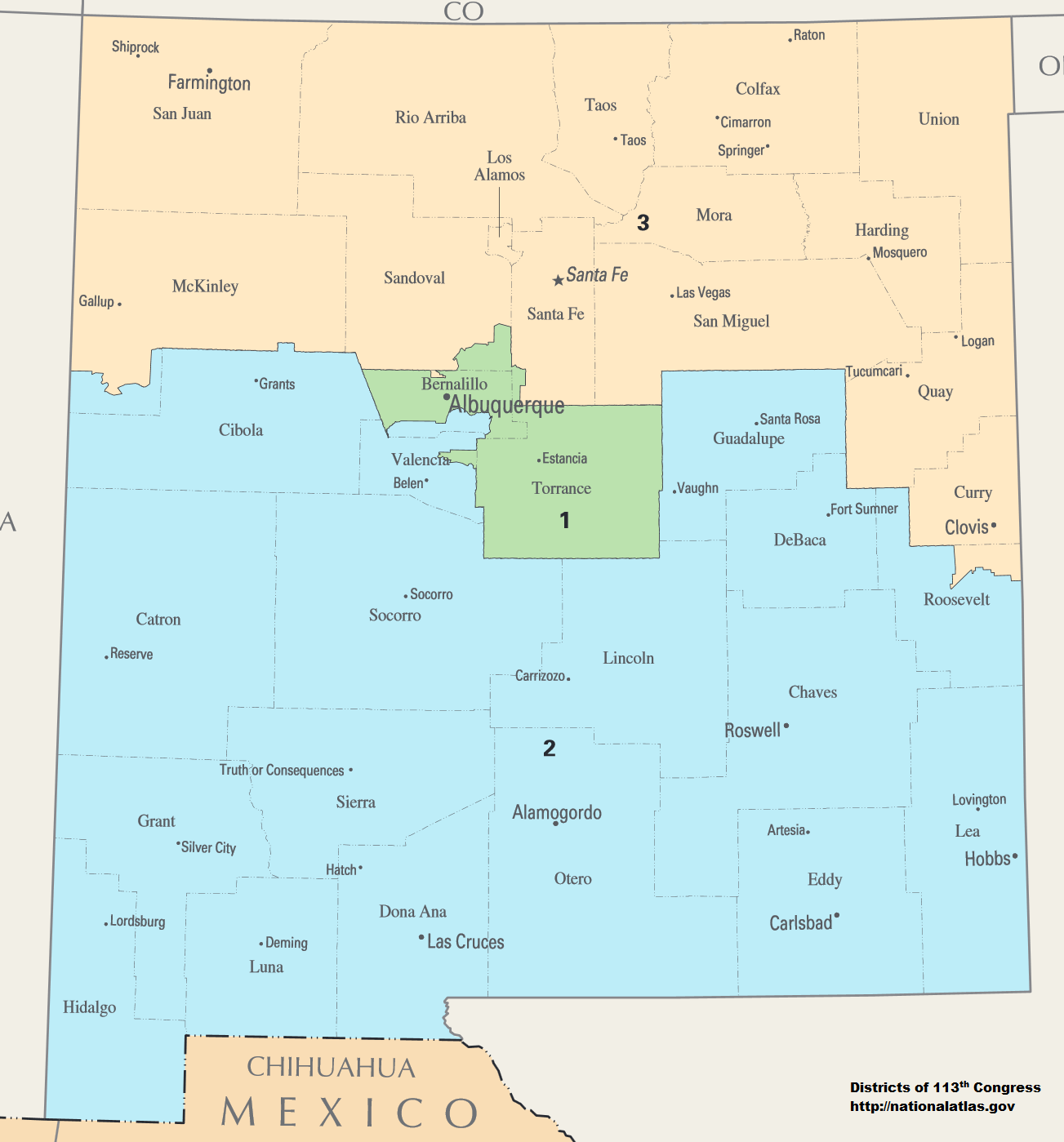
NM: My home state and the state where I reside has a somewhat competitive governorship, which has Michelle Lujan Grisham seeking a second term against former weatherman and 2020 senate candidate Mark V. Ronchetti. While Ronchetti overperformed Trumps anemic showing in NM, he still lost to Ben Ray Lujan by 5 points. While Republican strategists have suggested that the race will be very close, all the evidence that I have seen points to a Democratic hold. Most polling has shown a stable lead for MLG, outside of Trafalgar, a questionable polling machine. While I do think that MLG will underperform Biden, Biden won the state by 10 points, which gives some wiggle room for MLG. Also, early voting data points to high enthusiasm amongst the Democratic fold as out of 439,248 ballots cast, 226,266 come from Democrats. While Republicans will win the election day ballots cast, I doubt that it will be by blowout margins. Can Ronchetti win? Yes, but it’s unlikely and would fly against all evidence that I have seen. Likely D.
HI: Not much to say here. Josh Green will win. Safe D
AK: While RCV has put some uncertainty into the Alaskan governor’s election, in the end Mike Dunleavy should prevail when all is said and done. Likely R
OR: In what became Oklahoma for the Democrats, Oregon has been highly competitive this cycle. Boyed by the most disliked governor in the country, Republicans thought they had a very good chance at flipping the Governor’s Mansion for the first time since 1976. Yet Christine Drazan seems to have stalled out at 44 percent of the vote while Tina Kotek has risen in vote share. This is due to Betsy Johnson, the independent candidate who is a moderate Democrat losing votes and voters picking Kotek over Drazan. While a Republican win wouldn’t be surprising, I would rather be the Democrat in a state Biden won by 20+. Lean D
NV: Steve Sisolak seems to be the most endangered incumbent in this cycle. This is due to several factors, but the main one is that his opponent, Joe Lombardo, has run a very strong campaign. Ralston also predicted that Lombardo would win, setting up the chance for Nevada to send a D to the Senate and flip its Governor’s Mansion. I won’t pick Ralston, but I also wouldn’t be surprised by a Sisolak victory. Tilt R
AZ: Arizona is also set to send a D to the senate and keep a Republican in its Governor’s Mansion, as Kari Lake is favored to beat Katie Hobbs. Hobbs has run a lackluster campaign, while Lake has run a decent campaign (I say this through gritted teeth). Polling has been all over the place, though, with it showing both Lake and Hobbs leads. I would rather be the Republican, due to Arizona’s down ballot R lag, but much like Nevada, I can see the Democrat winning. It will once again come down to Maricopa County and Latino vote share. Tilt R.
These results would see a net gain of one for Democrats, as they flip two states while Republicans only flip Nevada. This, though, could be very wrong. However, in 2018, only two states ousted their incumbent governors, Illinois, and Wisconsin. This is why I have most of the incumbent’s winning reelection, because I just don’t see a ton of volatility. But I could be wrong.
Conclusion
I cannot predict the future, nor am I a psychic. But at some point, I do think fundamentally that things will be different than what almost all polling indicates. Maybe it’s hopium, maybe it’s delusion, or a combination of the two. I just can’t shake the fact that D’s overperformed in every special election held, and not a lot has changed since they occurred. Data is hard to see and because the data is shaky, I feel that this cycle will have some crazy results. We cannot see the forest through the trees, and the best data point will be tomorrow. See y’all on the other side.
 ABQSportsReporter